Ex Nihilo Nihil Fit: Meaning and Definition
What does “nothing comes from nothing” mean? Explore this Latin maxim and the article’s arguments about the origins of the universe and of life.
Nothing Comes from Nothing
Ex nihilo nihil fit, Latin for “nothing comes from nothing”, expresses an intuitive truth that no reasonable person can ignore or deny. Nothing can arise from nothingness. In other words, nothingness cannot create anything: neither matter nor life can emerge from it. This logical truth is worth bearing in mind, since it provides a starting point for examining the Creator’s existence in the light of facts and observations.
Our Universe: From Non-existence to Existence
Until the early twentieth century, the prevailing view was that our universe had always existed, was infinite in extent, and would continue to exist forever. This nineteenth-century approach, known as the “static universe model”, provided a fundamental basis for atheistic philosophy, which denied the existence of a Creator. In his book Fundamental Principles of Philosophy, the atheist philosopher Georges Politzer declared that the universe was not created, since, if it had been, it would necessarily have had a beginning:
“If it had been, then God would have created it instantaneously, out of nothing. Accepting its creation means accepting, first of all, that there was a time when the universe did not exist, and that something came into being from nothing. This is something beyond the reach of science.” (1. Georges Politzer, Principes fondamentaux de philosophie, Éditions Sociales, Paris, 1954, p. 84.)
When Politzer asserted that the universe had no beginning, he was reasoning within the static universe model and mistakenly believed that science supported him. However, advances in twentieth-century science and technology rendered obsolete earlier concepts such as the static universe, which had underpinned materialist theories.

Today, in the twenty-first century, modern physics has demonstrated through experiments, observations and calculations both that the universe had a beginning and that it was created from nothing through a great explosion.
This means that our universe came into existence from nothing. As we saw above, nothing can arise from nothingness; therefore a higher will must have brought about this creation out of nothing. This is a very different process from assembling existing objects to make something new, as in works of art or technological inventions. Everything taking shape perfectly in a single instant, when even time and space did not exist, is the very sign of God’s creation:
Were they created by none, or were they the creators [of themselves]?Or did they create the heavens and earth? Rather, they are not certain in faith.Quran — Surah الطور (52:35–36)Source : QuranEnc.com — English Translation - Rowwad Translation Center — v1.0.19
The American scientist William Lane Craig, known for his research on the Big Bang, confirms this point: “In fact, given the truth of the maxim ex nihilo nihil fit (nothing comes from nothing), the Big Bang requires a supernatural cause. Since the initial cosmological singularity marks the beginning of all space-time trajectories, the Big Bang cannot have a physical cause. Its cause must instead transcend physical space and time: it must be independent of the universe and immensely powerful. Moreover, this cause must be a being endowed with free will… The cause of the universe’s origin must therefore be a Creator who freely brought creation into existence.” (13. William Lane Craig, Cosmos and Creator, Origins & Design, spring 1996, vol. 17, p. 18.)
These facts agree remarkably with what the Quran stated fourteen centuries ago:
Are the disbelievers not aware that the heavens and earth were joined together and then We split them apart? We created from water every living thing. Will they not then believe?Quran — Surah Al-Anbiyaa (21:30)Source : QuranEnc.com — English Translation - Rowwad Translation Center — v1.0.19
Where Does Life Come From?
What distinguishes a bird or a giraffe from a stone, water or soil—in other words, from inanimate matter? The answer is obvious: life! But where does life come from? Can it arise from non-living matter?
Before the seventeenth century, when knowledge of nature was very limited, people believed that life could arise spontaneously from inanimate matter.
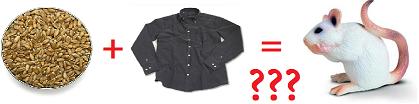
This view was called “abiogenesis”. People believed that insects arose from leftover food, and even that mice came from wheat. Curious experiments were conducted to establish the theory’s validity: wheat would be placed on a dirty garment, in the belief that a mouse would eventually emerge. This belief, also known as “spontaneous generation”, was widely accepted until the seventeenth century, when Francesco Redi refuted it. His experiments in 1668 showed that maggots appearing on meat did not arise spontaneously, but came from eggs laid there by flies.
After this discovery, proponents of abiogenesis retreated to the claim that non-living matter produced invisible microbes, rather than larger organisms such as maggots or frogs.
This claim persisted for the next two centuries and helped underpin the materialist philosophy that denied the existence of a Creator.
In 1864, Louis Pasteur destroyed this last straw to which atheist materialists clung. Through numerous experiments and investigations, he showed that microbes did not arise from non-living matter and that life could come only from life. He declared triumphantly at the Sorbonne: “The doctrine of spontaneous generation will never recover from the fatal blow struck by this simple experiment.” Sidney Fox and Klaus Dose, Molecular Evolution and the Origin of Life, New York: Marcel Dekker, 1977. Aware of the alarm he had caused in atheist materialist circles, Pasteur stated: “So much the worse for those whose philosophical ideas are troubled by my studies.”
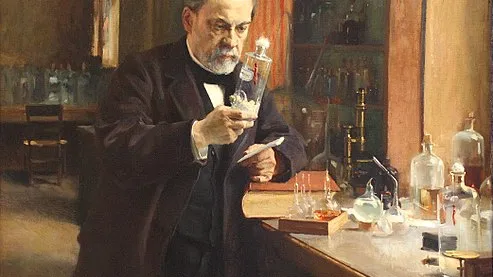
Modern science has demonstrated countless times that life cannot arise from non-living matter. Researchers have carried out numerous experiments in state-of-the-art laboratories, simulating the environmental conditions that existed when life first appeared, but without success. Despite all these experiments, they have never managed to produce a single living cell. Eventually, repeated failures even led to experiments of this kind being abandoned.
Antony Flew, one of the twentieth century’s best-known atheist philosophers, acknowledged his mistake at the age of eighty-one. He stated: “I have become convinced that it is simply out of the question that the first living matter evolved from non-living matter and developed into an extraordinarily complex creature.” Stuart Wavell and Will Iredale, “Sorry, says atheist-in-chief, I do believe in God after all”, The Sunday Times, 12 December 2004.
As we saw at the start of this article, “nothingness” cannot have given life to the first living beings on earth either. The certain answer is that a higher being created life. He alone can give life to inanimate matter:
It is Allah Who causes the grain and fruit-stones to sprout. He brings forth the living from the dead and the dead from the living. Such is Allah! So how are you being turned away?Quran — Surah Al-An'aam (6:95)Source : QuranEnc.com — English Translation - Rowwad Translation Center — v1.0.19
He brings the living out of the dead and the dead out of the living, and gives life to the earth after its death. This is how you will be brought forth[8].[8] Out of the graves at the time of resurrection.Among His signs is that He created you from dust, then you became human beings spreading [on the earth].Quran — Surah Ar-Room (30:19–20)Source : QuranEnc.com — English Translation - Rowwad Translation Center — v1.0.19