Biology and Biochemistry
Explore the law of biogenesis and discoveries about cells, DNA and biochemistry that this article presents as evidence of a Creator rather than chance.

Neuberg coined the word “biochemistry” in 1903 for the scientific discipline that studies the chemical reactions sustaining life in living organisms. Biology, meanwhile, is the science of life. Discoveries in these fields reveal that life could not have developed gradually, through chance or error, as
the materialist theories defended by atheism suggest. These theories have suffered crushing defeats at the hands of these sciences on questions involving genes, DNA, cellular systems and fundamental laws such as biogenesis.
Biology: The Law of Biogenesis
In medieval Europe, people commonly believed that life could arise spontaneously from non-living matter. Simple observations led them to this conclusion: maggots appeared on uncovered meat, and mice appeared wherever sacks of wheat were stored. They therefore concluded that life could arise from inanimate materials. Experiments were even carried out to “prove” this view. The Belgian chemist Jan Baptist van Helmont (1577–1644) spread wheat over a dirty shirt and later observed mice scurrying around it. He concluded that the mice had arisen from the combination of wheat and shirt. Another scientist, the German Athanasius Kircher (1601–1680), conducted a similar experiment. He poured honey over dead flies and later saw other flies circling the honey. He therefore assumed that combining honey with dead flies produced living flies.
Many scientists rejected this idea, including the Florentine Francesco Redi (1626–1697), who discovered that maggots on meat did not arise spontaneously but hatched from eggs laid by flies. Nevertheless, the debate
 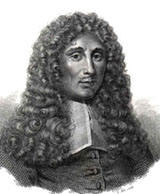 Francesco Redi’s experiment showed that the maggots came from eggs laid on the meat by flies. |
continued for a long time, and many scholars still defended spontaneous generation. For example, in 1859, the physician and naturalist Félix Pouchet of Rouen published Hétérogénie, ou traité de la génération spontanée (Heterogenesis, or a Treatise on Spontaneous Generation). Materialist circles enthusiastically championed such writings because spontaneous generation provided a cornerstone and “scientific support” for the idea that life was not created. Darwin himself supported this idea, claiming in On the Origin of Species that the first cell arose spontaneously in a “warm pond”.
Louis Pasteur (1822–1895), known as the father of modern biology, brought this theory to an end. Between 1860 and 1864, he conducted experiments demonstrating that living organisms can arise only from similar living organisms, and that life cannot emerge from non-living matter. Pasteur stated:

“Can matter organise itself? In other words, can organisms come into being without parents or ancestors? That is the question to be resolved… There are no circumstances known today in which microscopic beings can be said to have arisen without germs.”
Pasteur’s statements were received very poorly by materialist thinkers, who published various criticisms intended to discredit his discovery. Recognising that these objections were philosophical rather than scientific, Pasteur said:
“So much the worse for those whose philosophical ideas are troubled by my studies.”
Today, the law Pasteur discovered is considered fundamental to modern biology. It undermines evolutionary claims that life emerged from non-living matter under primitive conditions and supports the fact that life originated solely with Almighty God, who gave life to every living creature:
O you who believe, do not be like those who disbelieved and said about their brothers who traveled through the land or engaged in battle, “If they had stayed with us, they would not have died or been killed[72].” Allah makes that a cause of distress in their hearts. It is Allah Who gives life and causes death, and Allah is All-Seeing of what you do.[72] A believer should know for certain that all matters, including life and death, are in the Hands of Allah alone.Quran — Surah Aal-i-Imraan (3:156)Source : QuranEnc.com — English Translation - Rowwad Translation Center — v1.0.19
Biochemistry
In Darwin’s Black Box, a book discussing Darwinism’s scientific invalidity, the well-known biochemist Michael Behe describes the mindset of evolutionary scientists confronted with new biochemical discoveries:

"Over the past four decades, modern biochemistry has revealed the cell’s secrets. Progress has been hard won. Tens of thousands of people have devoted the best years of their lives to painstaking laboratory work… The combined result of these efforts to study the cell—to study life at the molecular level—is a loud, clear, piercing cry of “design”! The result is so unambiguous and significant that it must rank as the greatest achievement in the history of science. This scientific triumph should elicit cries of “Eureka!” from tens of thousands of voices.
Yet no bottles have been uncorked and no applause has been heard. Instead, a strange, embarrassed silence surrounds the sheer complexity of the cell. When the subject comes up in public, feet begin to shuffle and breathing becomes laboured. In private, people are a little more relaxed: many explicitly acknowledge the obvious, but then lower their eyes, shake their heads and leave it there. Why does the scientific community not embrace this discovery enthusiastically? Why is the observation of design handled with such intellectual caution? Because accepting intelligent design means accepting God’s existence.” Michael J. Behe, Darwin’s Black Box, New York: Free Press, 1996, pp. 231–232.